On the extraction and searing of the butcher’s steak (Bos taurus, crus diaphragmatis)
- Yield
- 2–3 servings
- Active time
- ≈ 15 min
- Cows required
- 1
Abstract
Each cow yields exactly one hanger steak. For most of recorded history this steak has been kept by the butcher, who was in a good position to take it, which is how it became known as the butcher’s steak. We report the successful acquisition of one specimen from a butcher. Nobody was hurt. The steak was split along its central membrane, which is inedible and which we therefore did not eat. It was then seared at a temperature best described as “smoke alarm adjacent” and taken off at 53°C. Slicing against the grain turned a famously chewy muscle into one that is merely enthusiastic. Sample size was limited by the number of diaphragms per cow.
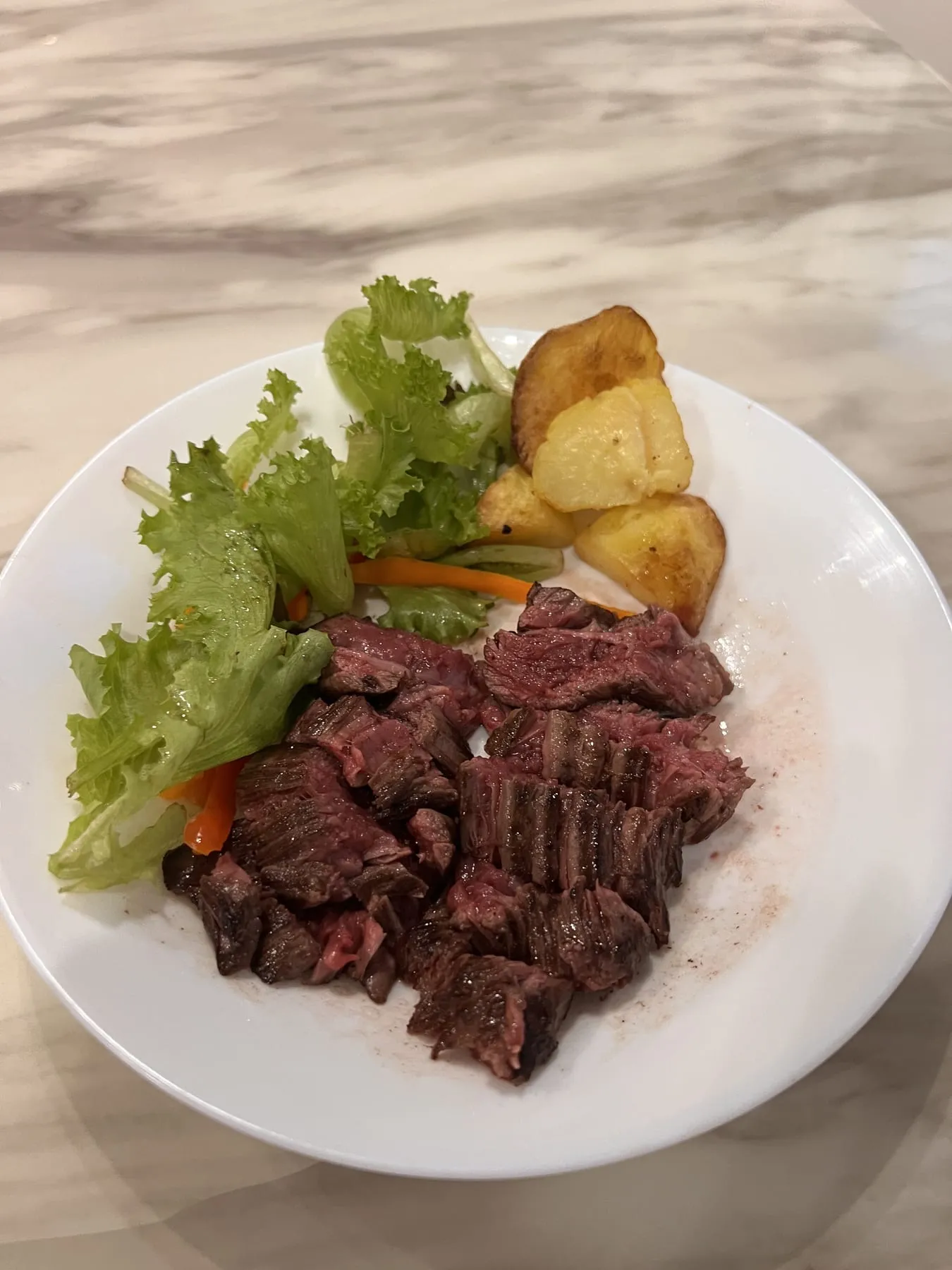
1. Materials
- 1 hanger steak, 600–700 g
- 1 tsp coarse salt, plus flaky salt to finish
- Black pepper
- 1 tbsp neutral oil with a high smoke point
Apparatus. A ridged grill pan or cast-iron skillet, a probe thermometer, a sharp knife and an extractor fan running at full speed.
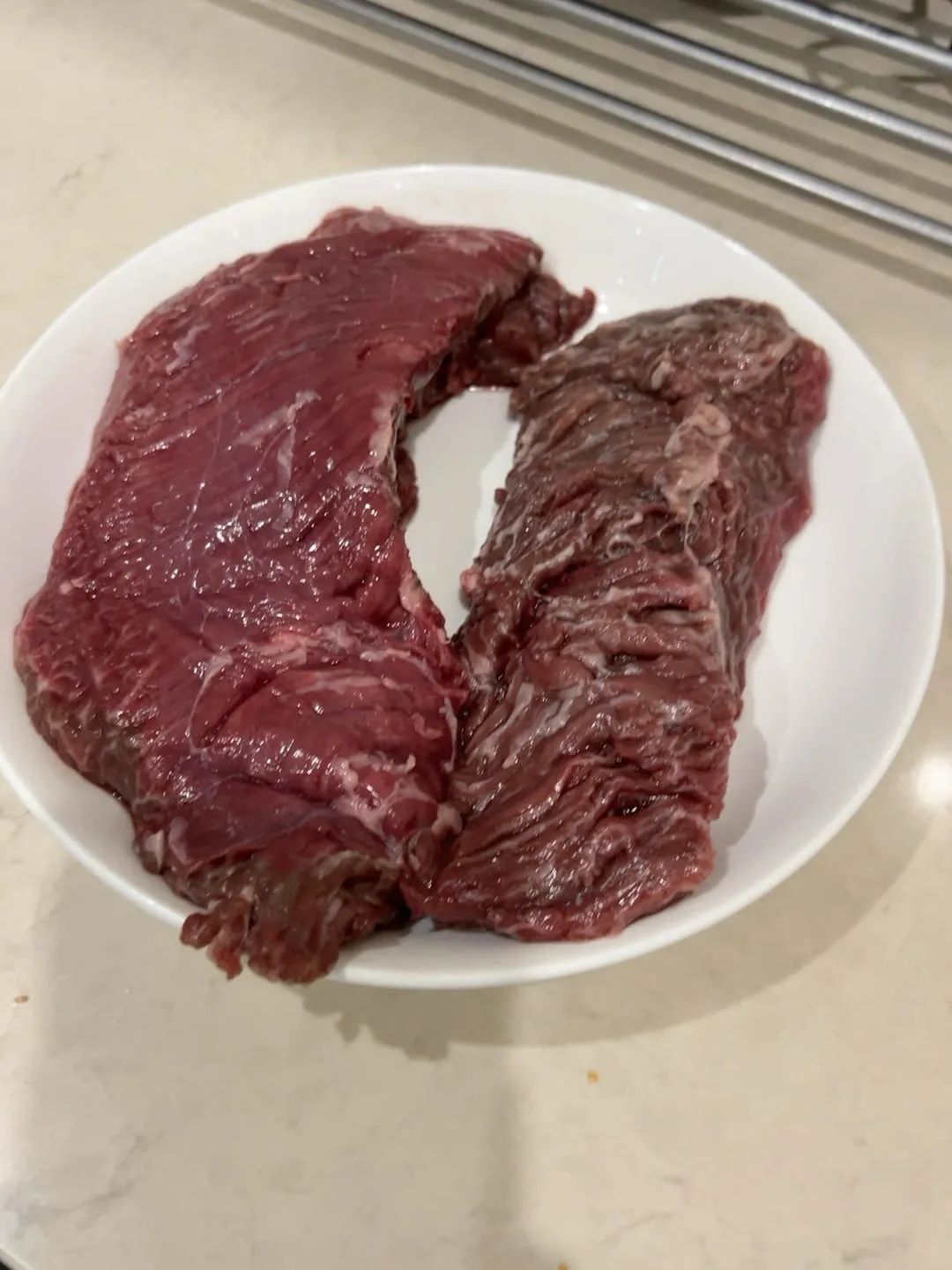
2. Method
- Split. If the butcher hasn’t already done it, cut down both sides of the tough central membrane and discard it. You now have two lobes. Trim off any silverskin.
- Salt early. Salt all over at least 45 minutes ahead, or the night before, uncovered in the fridge. Pat it completely dry before cooking.
- Sear. Heat the pan until it smokes. Oil the meat, not the pan, and lay it down. Leave it alone for 3–4 minutes, turn it, then give it another 3–4 minutes. Pull each lobe at 52–54°C in the thickest part. The thinner lobe will be done first.
- Rest for 5–10 minutes.
- Slice against the grain, about 1 cm thick. Finish with flaky salt and pepper.
3. Discussion
The grain does most of the work. Hanger has long, coarse fibres. Cut with the grain and you get strings. Cut across it and the slices are tender.
Stop at medium-rare. Hanger goes tough and slightly livery if it’s cooked much past medium, so pull it early.
Competing interests. The butcher was not consulted on this paper.